
How to Brief a Recruitment Consultancy in UAE for Better Shortlists
Most disappointing shortlists start with a weak briefing. If a recruitment consultancy in the UAE only receives a vague job description and a salary range, they are forced to guess – and you end up reviewing CVs that were never right for the role in the first place. A clear, structured brief is the fastest way to improve both the quality of your shortlists and the speed of your recruitment process in the UAE.
- Start with the role’s purpose, not just the title
Instead of opening with “we need a Senior Accountant”, explain why the role exists and what it is meant to change or protect in the business. Include three simple points:
- The core purpose of the role in one or two sentences.
- The key problems it should solve in the first 12–18 months.
- How success will be measured – for example, faster invoice collection, on‑time project delivery or lower churn.
This helps the consultancy look beyond keyword matches and focus on candidates who have actually delivered similar outcomes before, not just people with similar job titles.
- Define “must‑have”, “nice‑to‑have” and “deal‑breakers”
A common mistake is sending a long wish‑list without priorities. The result is confusion at the briefing stage and frustration at the shortlist stage. Instead, break your requirements into three clear buckets:
- Must‑have: non‑negotiable skills, certifications, languages or industry exposure.
- Nice‑to‑have: tools, markets or experience that would help but are not essential.
- Deal‑breakers: factors that automatically disqualify a candidate, even if everything else looks good.
When a recruitment agency in UAE understands these three layers, it can filter properly before CVs ever reach you and avoid long discussions about profiles that should never have been in the process.
- Share real context about team, culture and reporting lines
On paper, many candidates can do the job; in reality, not everyone will thrive in your environment. In your briefing, go beyond the org chart and give a clear picture of where this person will sit:
- Team size and structure, including direct reports and reporting lines.
- Working style – for example, highly structured and process‑driven versus fast‑moving and entrepreneurial.
- The stakeholders the role interacts with most, such as clients, operations, finance, or the board.
This context helps your recruitment partner target people who can succeed with your pace, decision‑making style and level of ambiguity, not just those whose CVs look similar to your last hire.
- Be specific on salary, benefits and flexibility
Time is often lost at the end of the process because expectations were never aligned at the start. At the briefing stage, be honest and concrete about:
- The base salary range and what would justify an offer at the top end.
- Benefits that matter in the UAE, such as housing, education, medical cover and annual flights.
- The working model – on‑site, hybrid or remote – plus any non‑negotiable requirements like shift patterns, weekend coverage or travel.
A recruitment consultancy in UAE that knows your real limits can qualify candidates properly on both skills and package, which reduces late‑stage drop‑outs, renegotiations and declined offers.
- Agree on a clear shortlist format and timelines
Even with a strong brief, you still need structure around how shortlists will be delivered and how quickly you will respond. Before the search starts, agree on:
- How many candidates you want per batch – often three to five strong profiles, not ten marginal ones.
- The format of each profile – for example, a short-written summary of relevant experience, current package, notice period and key strengths, attached to the CV.
- Target timings for shortlist delivery, first interviews and final decisions. It’s especially important to make sure the hiring manager has availability for interviews so the timeline is not compromised.
- Who will give feedback on each batch and how quickly, such as committing to respond within 48 hours.
This structure helps your partner pace the search properly and keep good candidates engaged, instead of losing them to faster processes elsewhere. It is especially important for permanent hiring in the UAE, where each decision has a long‑term impact on the team and the business.
- Treat the brief as a two‑way conversation, not a one‑off file
Finally, the best briefs are not static documents – they are the starting point of an ongoing conversation. As the consultancy tests the market, they will get real‑time feedback on salary levels, available profiles and candidate reactions to the role.
Be open to refining the brief together: adjusting the profile, widening or narrowing the industry focus, flexing on seniority, or rethinking the package where necessary. This collaborative approach turns your recruitment consultancy in UAE into a genuine hiring partner, and your shortlists will steadily improve with every search you run together.
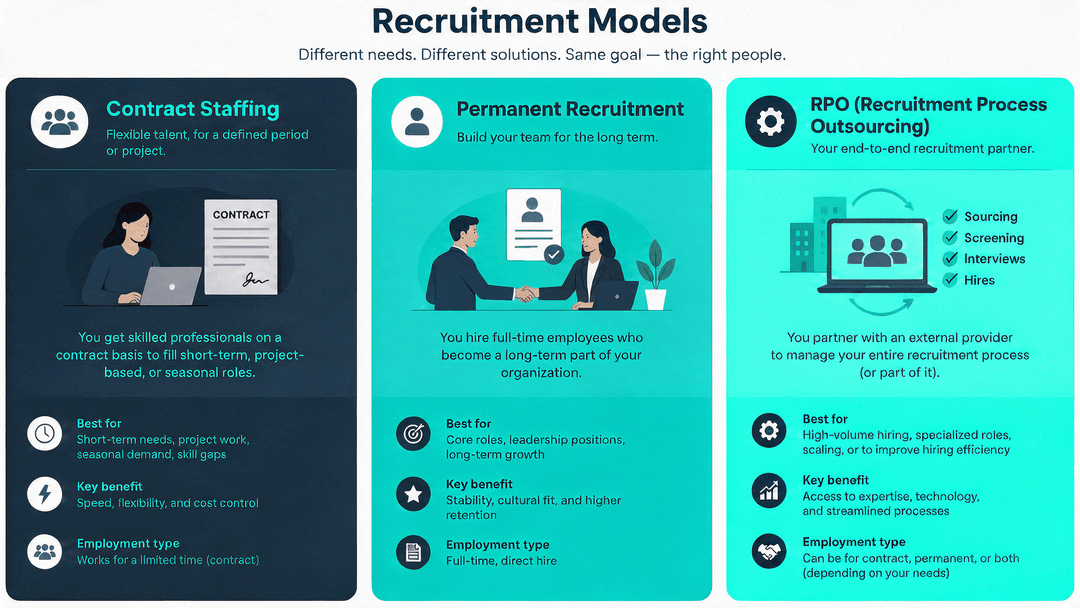
How to Choose the Right Hiring Model for Business Growth in the UAE
Choosing the right hiring model helps UAE businesses balance long-term growth, workforce flexibility, talent quality, and recruitment efficiency.

Why Your Job Ad Isn’t Attracting the Right Candidates
Receiving applications but not from the right candidates? Learn how clearer requirements, stronger employer branding, relevant keywords, and a simpler application process can improve candidate

Why Great Candidates Reject Job Offers
Great candidates may reject job offers due to slow hiring, unclear compensation, poor candidate experience or limited career growth. Discover how UAE employers can improve