
Is Job Hopping Really a Red Flag Anymore?
According to recent recruitment trends in the UAE, career paths are becoming less linear than ever before. Professionals are changing jobs more frequently in pursuit of career growth, higher salaries, and better opportunities, leaving many employers questioning whether job hopping should still be considered a hiring red flag.
For companies focused on talent acquisition in the UAE, the answer isn’t as straightforward as it once was. While some hiring managers remain cautious about candidates with multiple short-term roles on their CVs, many recruitment agencies in Dubai now encourage employers to look beyond tenure alone and evaluate the value a candidate can bring to the organization.
Why Job Hopping Is Becoming More Common
Changing jobs every few years has become a growing hiring trend in the UAE, particularly in industries such as technology, finance, sales, and marketing.
Candidates are often moving roles to:
- Accelerate career progression
- Expand their skillsets
- Increase earning potential
- Find stronger workplace cultures
- Access flexible working opportunities
As a result, businesses relying on outdated hiring practices may overlook highly qualified candidates who could become valuable long-term employees.
What Recruitment Professionals Look For
Experienced recruiters and hiring managers are increasingly focusing on the story behind the CV rather than simply counting the number of roles.
When assessing candidates, a staffing agency or talent acquisition specialist will typically ask:
- Has the candidate demonstrated career progression?
- Did they gain new skills with each move?
- Were there industry-related reasons for changing jobs?
- Can they clearly explain their career decisions?
A candidate who has changed employers three times in five years may still be a stronger hire than someone who has remained in the same position without growth or development.
This is where a thorough recruitment process becomes essential. Professional recruiters will often conduct detailed reference checks to verify performance, understand the circumstances behind career moves, and assess a candidate’s reliability, achievements, and long-term potential. Looking beyond the CV can provide valuable insight that helps employers make more informed hiring decisions.
When Job Hopping Can Be a Concern
Although job hopping is becoming more accepted, there are situations where it may still raise concerns for employers.
These include:
- Repeated short tenures without progression
- Leaving roles within a few months of joining
- Inability to explain career moves
- A pattern of abandoning projects before completion
For organizations focused on employee retention, these patterns may indicate a higher risk of turnover.
The Bigger Question for Employers
Perhaps the real question isn’t whether candidates are job hopping, it’s why they feel the need to.
Many professionals leave because they cannot find:
- Career development opportunities
- Strong leadership
- Competitive compensation
- Learning and training programs
- Positive workplace culture
Companies that invest in employee growth and engagement are often more successful at attracting and retaining top talent.
Job hopping is no longer the automatic red flag it once was. In today’s competitive market, businesses should focus less on how often a candidate changed jobs and more on the skills, achievements, and experience they bring.
For organizations developing a stronger talent acquisition strategy, understanding the reasons behind career moves and reference checking can lead to better hiring decisions and improved placements.
A candidate’s journey may tell you far more than the number of years they’ve spent in a single role.

What Makes a Candidate Stand Out? 8 Qualities Employers Look For
Successful candidates stand out through proven results, communication, adaptability, accountability, cultural alignment, and the potential to grow with UAE businesses.
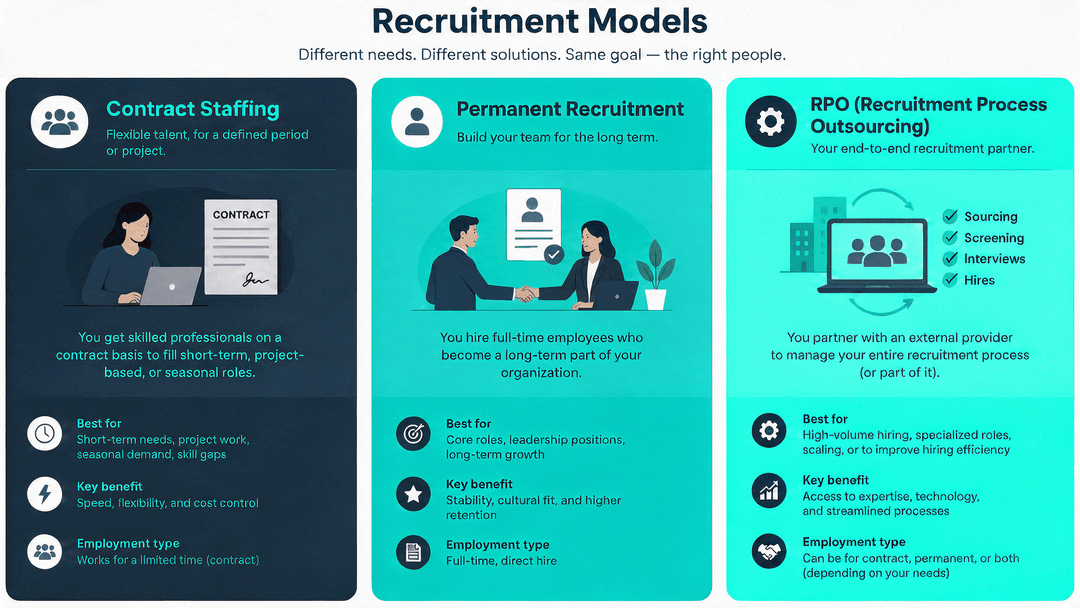
How to Choose the Right Hiring Model for Business Growth in the UAE
Choosing the right hiring model helps UAE businesses balance long-term growth, workforce flexibility, talent quality, and recruitment efficiency.

Why Your Job Ad Isn’t Attracting the Right Candidates
Receiving applications but not from the right candidates? Learn how clearer requirements, stronger employer branding, relevant keywords, and a simpler application process can improve candidate