
Why Great Candidates Reject Job Offers
You’ve found a strong candidate. The interviews went well, the hiring team is impressed, and an offer has been made. Then comes the surprise: they turn it down.
While many employers today have access to a large pool of applicants, securing the right talent isn’t always straightforward. Even candidates who appear highly interested throughout the recruitment process may ultimately decide not to move forward.
Understanding why candidates reject job offers can help businesses improve their talent acquisition strategy, strengthen their employer brand, and make more effective hiring decisions.
-
The Hiring Process Took Too Long
One of the most common reasons candidates disengage during the final stages of recruitment is a lengthy hiring process.
Multiple interview rounds, delayed feedback, and slow approval processes can lead to uncertainty and a loss of momentum. The longer the process continues, the greater the risk that candidates may reconsider their options, remain in their current role, or lose interest altogether.
Businesses that make timely, well-informed hiring decisions are often more successful in securing the talent they want.
-
Salary and Benefits Didn’t Meet Expectations
Salary isn’t everything, but it remains an important factor in a candidate’s decision-making process.
Candidates want clarity around compensation, benefits, annual leave, healthcare coverage, bonuses, and professional development opportunities. If the final offer does not align with expectations established during the recruitment process, candidates may choose not to proceed.
Setting realistic expectations early can help reduce misunderstandings and improve offer acceptance rates.
-
They Didn’t Connect with the Company Culture
Skills and experience are important, but cultural fit matters too. Structured assessment centres can help employers evaluate candidate capabilities and cultural alignment before an offer is made.
Candidates often evaluate:
- Workplace culture
- Leadership style
- Team dynamics
- Company values
- Career development opportunities
A strong employer brand helps candidates understand what it’s like to work within an organization and whether they can see themselves succeeding there long term.
-
Career Growth Wasn’t Clear
Many professionals evaluate opportunities based on their long-term career prospects.
Candidates may hesitate to accept an offer if they cannot clearly see:
- Career progression opportunities
- Learning and development programs
- Leadership exposure
- Increased responsibility over time
- A clear path for professional growth
Organizations that communicate career development opportunities effectively are often more successful in securing and retaining high-quality talent.
-
Poor Candidate Experience
The recruitment process says a lot about an organization.
Delayed communication, confusing interview stages, lack of feedback, or disorganized scheduling can create a negative impression long before a candidate joins the company.
A positive candidate experience demonstrates professionalism and helps build confidence in the business.
-
The Role Didn’t Match Their Expectations
Sometimes candidates reject offers because the role they interviewed for differs from what they initially expected.
This can happen when:
- Responsibilities are unclear
- Reporting structures change
- Expectations evolve during the process
- The day-to-day role differs from the job description
Clear communication from the beginning helps ensure alignment and reduces the likelihood of offer rejections later in the hiring process.
How Businesses Can Improve Offer Acceptance Rates
To improve hiring outcomes, employers should:
- Streamline the recruitment process
- Communicate clearly and consistently
- Set expectations early
- Offer competitive compensation and benefits
- Highlight career development opportunities
- Prioritize candidate experience
These steps can significantly improve recruitment outcomes and help businesses secure the talent they need. For organisations requiring specialist support, permanent recruitment services can strengthen candidate sourcing, screening, and engagement throughout the hiring journey.
When strong candidates reject job offers, it’s rarely due to a single factor. More often, it’s the result of mismatched expectations, unclear career opportunities, poor communication, or an inconsistent recruitment experience.
The businesses that consistently secure the best talent are those that communicate clearly, move efficiently, and provide candidates with a compelling reason to join. By focusing on these areas, organizations can improve offer acceptance rates and make more successful hiring decisions.
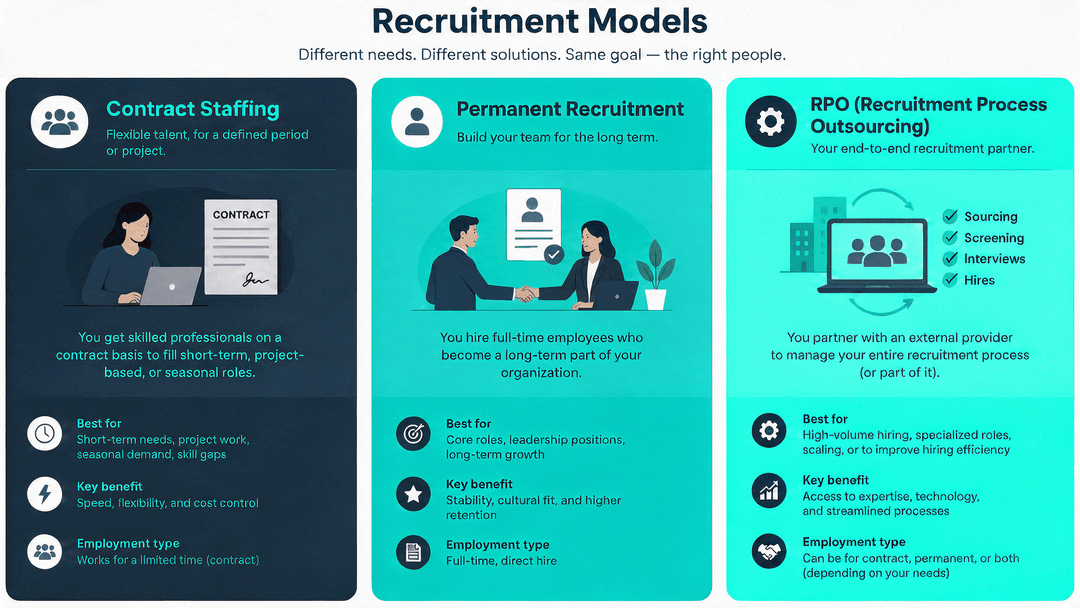
How to Choose the Right Hiring Model for Business Growth in the UAE
Choosing the right hiring model helps UAE businesses balance long-term growth, workforce flexibility, talent quality, and recruitment efficiency.

Why Your Job Ad Isn’t Attracting the Right Candidates
Receiving applications but not from the right candidates? Learn how clearer requirements, stronger employer branding, relevant keywords, and a simpler application process can improve candidate

How to Attract Top Talent in the UAE’s Competitive Job Market
Attracting qualified professionals in the UAE requires more than publishing job vacancies. Discover how employer branding, talent planning, candidate experience and the right recruitment strategy